
Build an approval‑ready credit profile
Understand what’s driving your credit decisions, identify items that may be unfair or inaccurate, and take a structured next step toward stronger approvals and better terms.
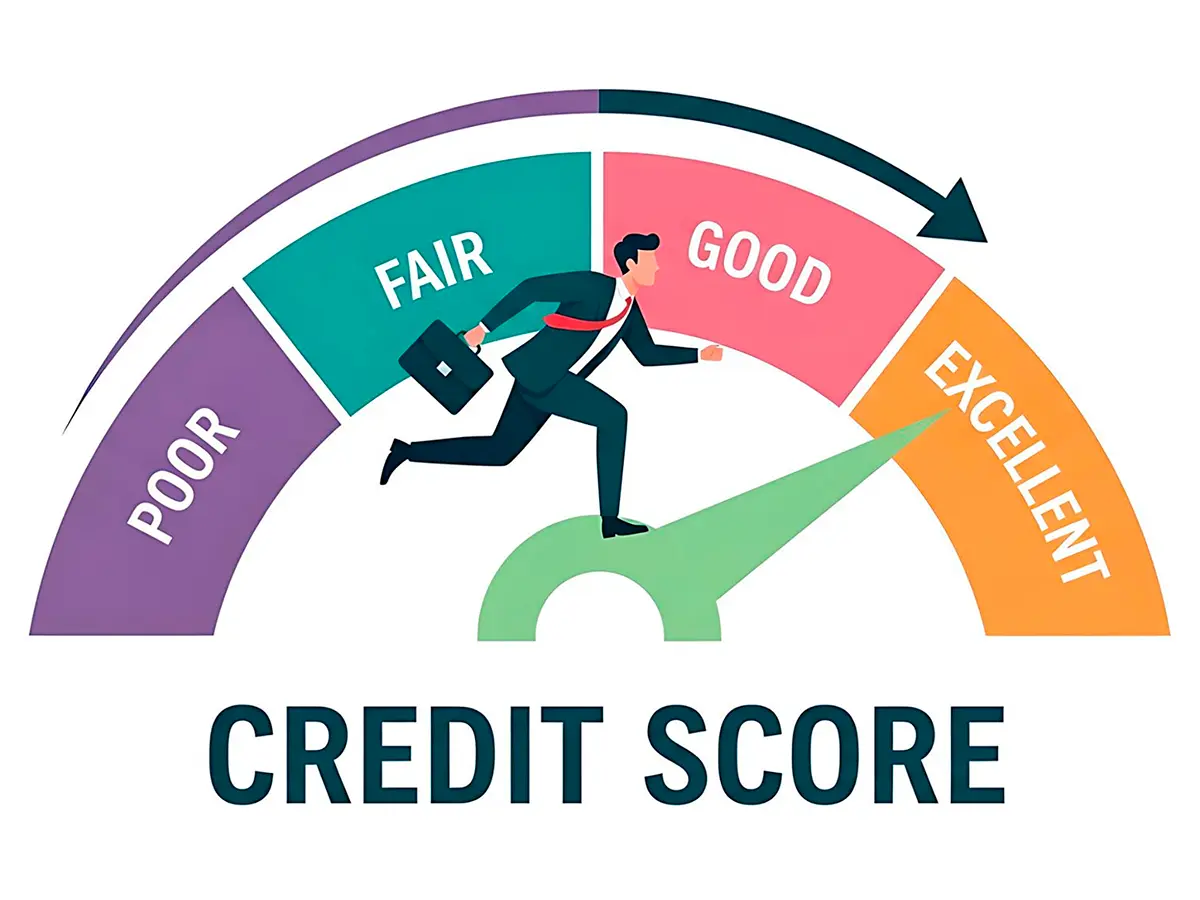
Built around established U.S. credit reporting practices and dispute procedures under the Fair Credit Reporting Act (FCRA). No unrealistic promises—just clarity, documentation, and structured credit improvement.
Unlock more options
Choose the outcome you care about. We’ll outline what improves it—and what to watch for—so you can move forward with confidence.
Your path to stronger credit
A stronger credit profile can mean better approval odds, improved loan terms, and more financial flexibility. Get a clear, no-fluff overview of what credit improvement can help you achieve — then take the next step when you're ready.
Credit decisions in the U.S. are typically influenced by payment history, utilization ratios, account age, recent inquiries, and the accuracy of reporting across major credit bureaus.
Even small inconsistencies can affect lending algorithms. A structured credit improvement approach focuses on verified data, responsible usage patterns, and consistent financial behavior.
*Results vary. This page does not guarantee outcomes.
How it works
A straightforward workflow used by reputable credit‑support programs: review, challenge what’s questionable, and build stronger habits while updates are processed.

Review your starting point
Clarify your goal and look at what’s currently affecting approvals and terms.

Identify what can be challenged
See what information is typically needed, what to expect next, and how the workflow usually looks.

Move forward
Continue to explore available options and take the next step toward better credit outcomes.
credit repair cost average explained for smart budgeting
The phrase "credit repair cost average" sounds neat, yet the real number flexes with your situation, local regulations, and how services price their work. From my researcher notes across public quotes and disclosures, most consumers see fees cluster in a few predictable bands, with meaningful outliers when legal issues or heavy dispute volumes appear.
Key pricing models you'll encounter
- Monthly subscription + setup: Common. Setup fee typically $19 - $199, then $69 - $129 per month. Work includes audits, dispute batches, and follow-ups.
- Pay-per-delete: You pay only when an item is removed or corrected. Often $20 - $150 per item per bureau. Transparent but unpredictable if many items are in play.
- Flat package: One-time $199 - $599 for a defined round (30 - 90 days) of disputes and coaching. Good for light files.
- Hourly coaching/consults: $75 - $200 per hour to review reports, draft letters, and build a plan you execute yourself.
- Hybrid bundles: Smaller setup, modest monthly, and discounted per-delete fees for complex files.
What the totals usually look like
For a light cleanup (one to three negatives), the practical spend often lands around $200 - $600. Moderate files (four to eight mixed items) more commonly fall between $600 - $1,500. Complicated situations - multiple collections across bureaus, identity theft fallout, or escalations - can push beyond $1,000 - $3,000, especially if legal assistance enters the picture. Timelines span two to six months for many cases, though stickier items can take longer, which raises monthly-plan totals.
What actually drives your number
- Item count and type: Late payments are simpler; charge-offs, collections, and public records demand more cycles.
- Across three bureaus: One deletion may need three wins, tripling per-delete math.
- Age and documentation: Older, sloppy tradelines are cheaper to dispute than fresh, well-documented debts.
- Add-ons: Credit monitoring ($15 - $40/mo), identity-theft remediation, or goodwill outreach can stack costs.
- State rules and guarantees: Compliance and refund policies subtly influence pricing.
DIY vs. pro: money and time
Going solo is viable, especially for a small number of clean-cut inaccuracies. Expect soft costs: certified mail at $4 - $6 each (10 - 20 letters can be $40 - $120), monitoring for a few months, and your time drafting, tracking, and escalating. Professionals compress learning curves and cadence; your tradeoff is fee structure versus speed and organization.
Real-world snapshot
Tuesday morning, I pulled a three-bureau set and noted one 30-day late plus two small collections. Quotes returned: subscription firm at $99 setup + $89/mo; a flat-fee shop at $349 for a 60-day round; pay-per-delete specialist at $75 - $120 per item per bureau. Under a three-month horizon, the subscription path projects roughly $366; flat fee stays $349; per-delete could be $450 - $720 if all three bureaus update on two collections. The "credit repair cost average" here lives between $349 - $720, fully dependent on outcomes and duration.
How to evaluate a quote
- Request an itemized plan: setup, monthly, and any per-delete numbers.
- Clarify the work cadence and expected timeline per dispute round.
- Define "success" (deletion, correction, or goodwill) and how it's verified.
- Check cancellation terms, refunds, and complaint history.
- Confirm compliance with consumer-protection rules and get the agreement in writing.
So where does the credit repair cost average truly sit? For moderate files handled by a subscription service, $600 - $1,200 is a fair directional band, with leaner DIY paths and pricier complex cases on either side. Start with a 90-day budget, track results per round, and recalibrate - effective credit repair is iterative, and the most economical route is the one that fits your file's reality today, with room to adjust tomorrow.
How Much Does It Cost To Repair Your Credit? ... If you do hire a credit repair company, be prepared to pay at least several hundred dollars. How ...
Some credit repair companies charge a monthly fee ranging from $50 to $150 per month. In addition to the monthly fee, there may be setup fees and fees for ...
There is usually a start-up fee of between $70 and $100, as well as a monthly fee that ranges from $70 to $150. Some companies offer discounts ...
Frequently asked questions
A clear next step — without the guesswork
See what’s impacting approvals and what may deserve a closer look.
Understand how disputes are structured and what documentation matters.
Improve utilization, consistency, and long-term credit stability.
See what improving your credit could change
Take a structured next step based on your current profile — and decide with clarity.